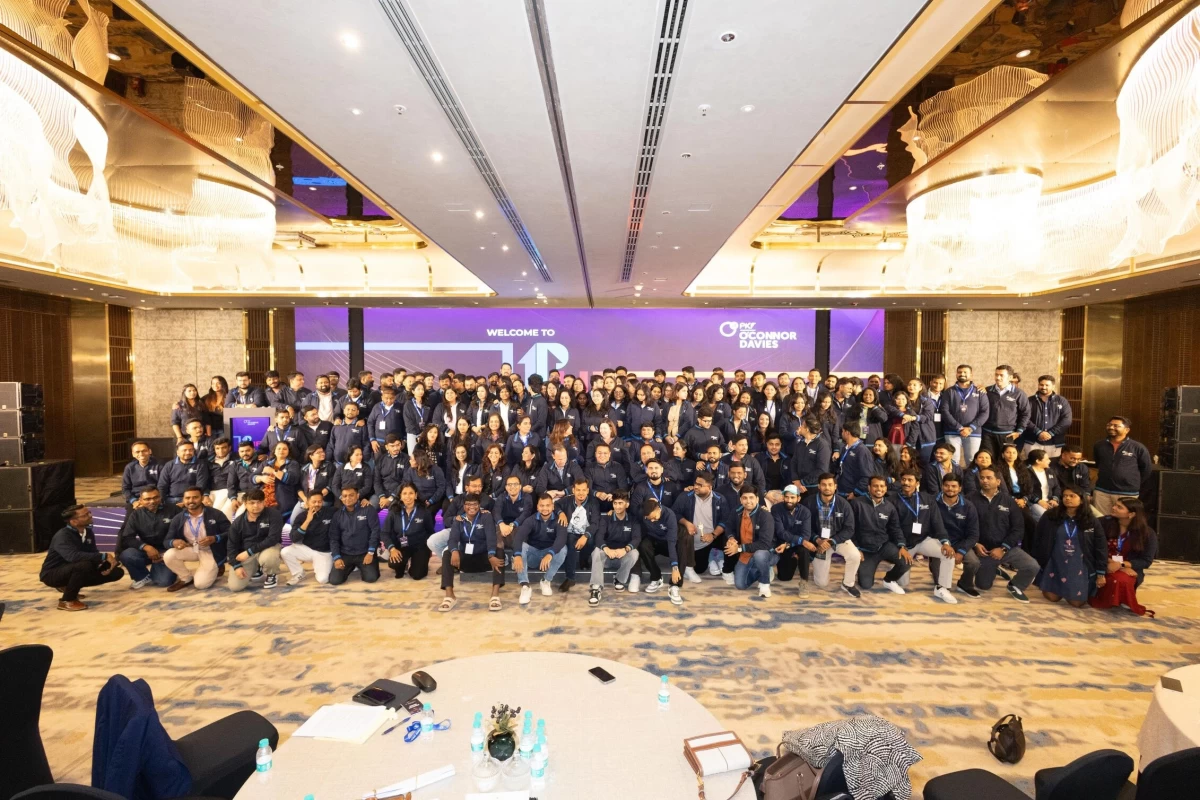


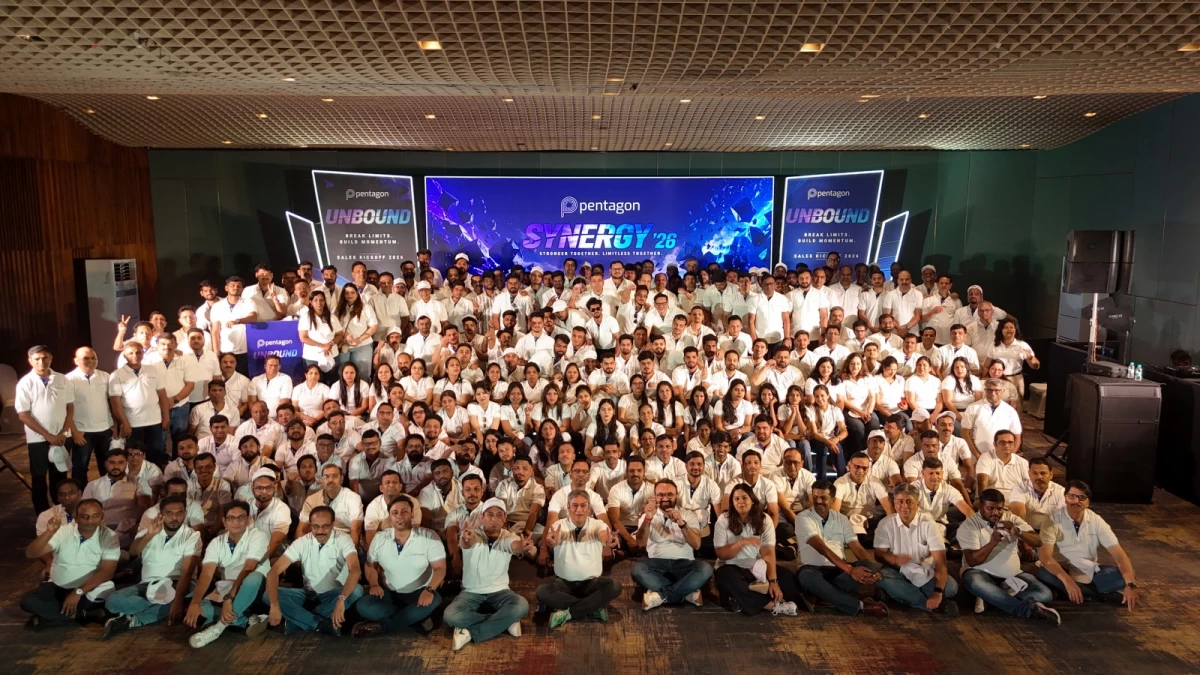
Imagine organising a corporate event for 300, 500 or even 1,000 employees. One group is participating in team-building challenges, another is enjoying interactive games, some employees are attending a business session, and others are getting ready for an entertainment performance.
Everything is happening at the same venue, sometimes simultaneously. The activities need to start on time, participants need clear instructions, technical arrangements must work smoothly, and every team should know where to go next.
Sounds complicated? It can be!
Managing multiple activities at a large corporate event requires much more than arranging a few games or booking entertainment. It involves detailed planning, activity scheduling, team coordination, venue management, technical production and real-time execution.
This is where professional Offsite Team Building Company in India makes a difference.
At SOS Party, the focus is on bringing different event elements together to create a well-coordinated experience. Whether it is a corporate offsite, annual celebration, employee engagement programme, team-building event or large-scale corporate gathering, every activity needs to fit into the bigger event plan.
Let's understand how multiple activities can be managed efficiently at a large corporate event and what goes into creating a seamless experience for hundreds of participants.
Why Managing Multiple Activities at a Large Corporate Event Is Challenging?

A large corporate event often involves several activities taking place throughout the day. Unlike smaller gatherings, where participants can follow a single schedule, large events may require multiple activity zones, different groups, separate facilitators and simultaneous event arrangements.
Here are some common challenges event organisers need to consider.
1. Coordinating Multiple Activities at the Same Time
When several activities run simultaneously, coordination becomes essential. Each activity needs its own schedule, designated space, facilitators and equipment.
For example, an event may include an outdoor Amazing Race, indoor problem-solving challenges, a creative workshop and a music-based team activity. All four experiences need to run without interrupting one another.
2. Managing Large Participant Groups
A group of 50 employees is relatively easy to coordinate compared with 500 participants.
Large corporate events require participants to be divided into manageable groups, guided towards the right activity areas and informed about schedules and instructions.
Without proper coordination, activities can become overcrowded, delayed or confusing.
3. Maintaining a Smooth Event Schedule
Every activity has a specific duration. If one session gets delayed, it can affect the activities scheduled after it.
This becomes particularly important when the event includes welcome sessions, team-building activities, lunch, entertainment, award ceremonies and closing celebrations.
4. Managing Technical and Production Requirements
Some activities need microphones, speakers, LED screens, lighting, stage arrangements and other technical equipment.
If multiple event elements depend on technical support, they must be coordinated carefully to avoid equipment conflicts and unnecessary delays.
5. Keeping Participants Engaged
A large event should offer something for different personalities and preferences. While some employees enjoy outdoor challenges, others may prefer creative workshops, interactive games or entertainment.
A balanced activity plan helps make the event enjoyable and inclusive.
How SOS Party Manages Multiple Activities at a Large Corporate Event?
Managing multiple activities successfully starts long before participants arrive at the venue. It requires a structured approach that connects planning, coordination and on-ground execution.
Here are the important steps involved.
1. Understanding the Event Objectives and Requirements
The first step is understanding what the company wants to achieve through the event.
Is it an employee engagement programme? A corporate team-building day? An annual celebration? A leadership offsite? Or a combination of business sessions and entertainment?
The event objective influences almost every planning decision.
SOS Party considers important requirements such as:
-
Total number of participants.
-
Event duration and preferred dates.
-
Type of corporate event.
-
Age groups and interests of participants.
-
Preferred activities and entertainment.
-
Venue and space requirements.
-
Technical and production requirements.
-
Budget and logistical considerations.
For example, a company organising an employee engagement event for 500 participants may need a different activity structure from an organisation planning a leadership retreat for 50 senior employees.
Understanding these requirements helps create an event plan that is practical and aligned with the company's expectations.
2. Dividing the Event into Activity Zones
One of the most effective ways to manage multiple activities is to create separate activity zones.
Instead of gathering everyone in one place, the venue can be divided into different spaces based on the activities being organised.
For example:
| Activity zone | Possible activities |
| Outdoor activity zone | Amazing Race, Corporate Spartans, outdoor challenges |
| Indoor activity zone | Problem-solving games, Shark Tank-style activities |
| Creative activity zone | The Big Picture, creative workshops |
| Music and rhythm zone | Drum Circle, Boomwhackers |
| Competition zone | Squad Activities, Build and Race F1 Cars |
| Entertainment zone | DJ, live band, performances and stage activities |
Each zone can have its own activity facilitator, equipment and schedule.
This arrangement helps distribute participants across the venue and allows multiple experiences to happen without creating unnecessary congestion.
3. Creating a Detailed Activity Schedule
A large corporate event needs a carefully planned run of show.
The schedule should mention when each activity starts, how long it runs, where participants need to be and when transitions happen.
For example, an event can begin with a welcome session, followed by group allocation and simultaneous team-building activities. After lunch, participants can move into indoor challenges or creative experiences before joining the final entertainment programme.
A sample schedule could look like this:
| Time | Event activity |
| 9:00 AM – 10:00 AM | Guest arrival, welcome and refreshments |
| 10:00 AM – 10:30 AM | Opening session and icebreakers |
| 10:30 AM – 12:30 PM | Multiple team-building activities across different zones |
| 12:30 PM – 1:30 PM | Lunch and networking |
| 1:30 PM – 3:00 PM | Indoor challenges and creative workshops |
| 3:00 PM – 4:00 PM | Group competitions and collaborative activities |
| 4:00 PM – 4:30 PM | Hi-tea and refreshments |
| 4:30 PM – 6:00 PM | Entertainment, DJ and interactive performances |
| 6:00 PM – 7:00 PM | Recognition, group photographs and closing |
The timings can be adjusted according to the event format, participant count and venue arrangements.
A well-designed schedule also includes buffer time between activities so that small delays do not disrupt the entire programme.
4. Assigning Facilitators and Coordination Teams
Even the most exciting activity can become difficult to manage without proper facilitation.
Each activity zone needs someone responsible for explaining instructions, managing participants, keeping track of time and ensuring that the activity runs as planned.
For a large corporate event, coordination may involve:
-
Activity facilitators who conduct the games and challenges.
-
Event coordinators who monitor the overall schedule.
-
Group coordinators who guide participants between zones.
-
Technical teams who manage sound, lighting and equipment.
-
Production teams who coordinate stage and entertainment requirements.
-
Venue and hospitality coordinators who manage guest arrangements.
Clear responsibilities help everyone understand their role and reduce confusion during execution.
5. Selecting Activities That Work for Large Groups

Not every activity is suitable for every group size. An activity designed for 20 participants may not work efficiently for 300 employees unless it is adapted into multiple teams or rounds.
SOS Party offers different activity formats that can be selected according to group size, event objectives and available space.
Some examples include:
Amazing Race
Best for collaboration, strategy and problem-solving
Participants work in teams to complete challenges, solve clues and reach different checkpoints. This format can be organised across multiple groups to encourage friendly competition.
Corporate Spartans
Best for energy, teamwork and friendly competition
A series of engaging challenges encourages teams to collaborate, communicate and participate in an energetic group experience.
Shark Tank
Best for creativity, communication and business thinking
Participants develop ideas, work in groups and present their concepts in a format inspired by business pitching.
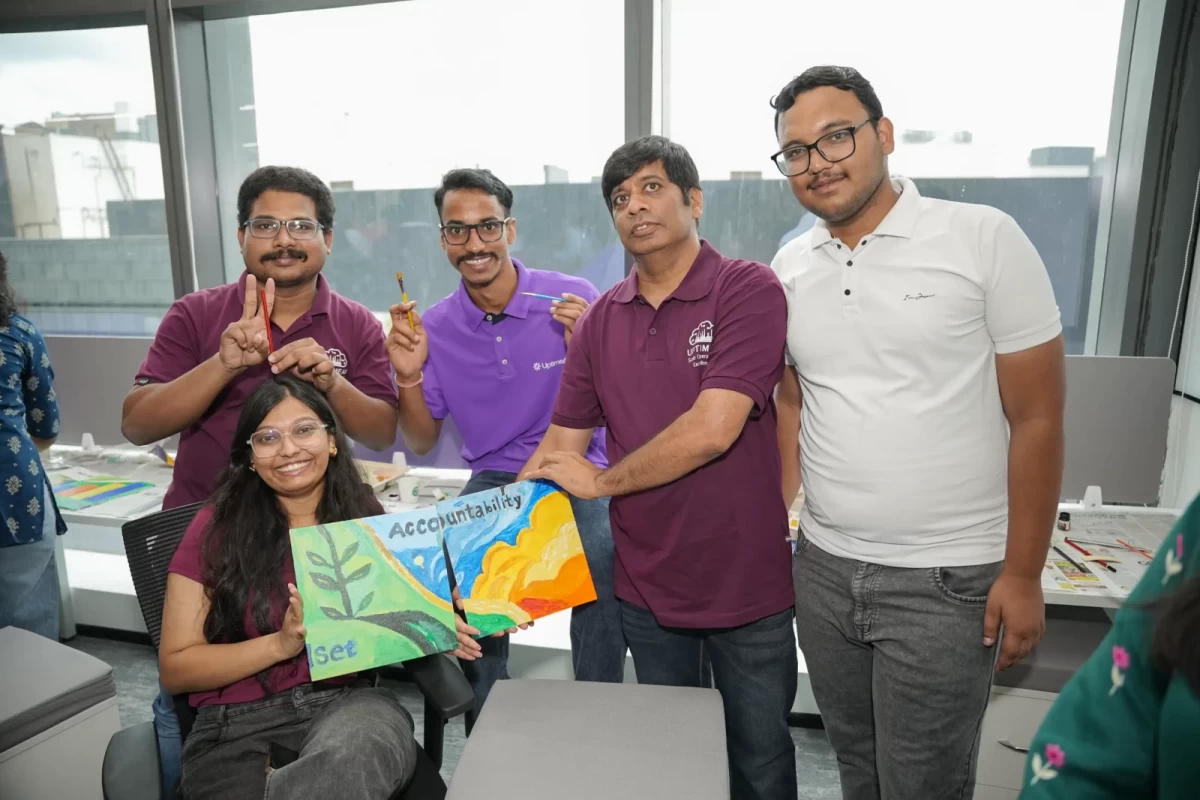
The Big Picture
Best for collaboration and collective creativity
Different teams contribute to a larger creative outcome, highlighting how individual efforts combine to achieve a common goal.
Drum Circle and Boomwhackers
Best for group participation and shared energy
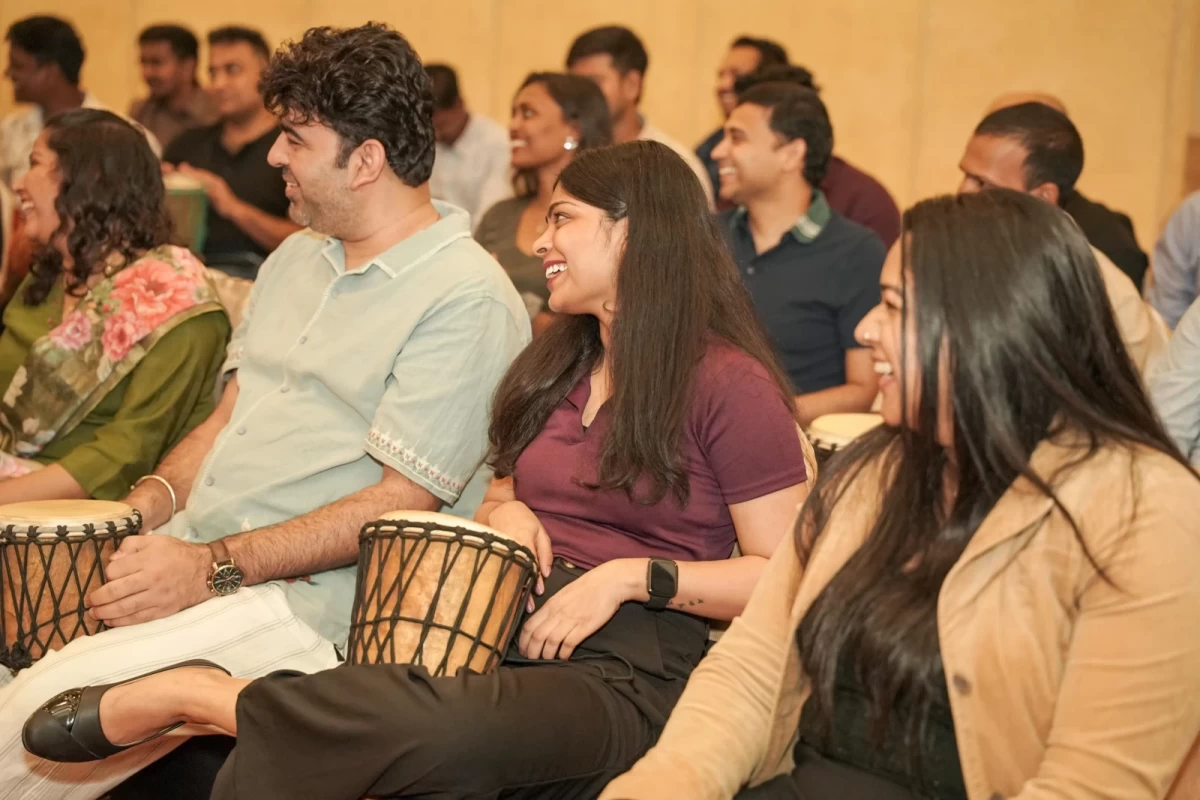
Music-based activities encourage participants to work together through rhythm, coordination and collective participation.
Build and Race F1 Cars
Best for innovation, planning and friendly competition
Teams work together to build and race their creations, combining creativity with problem-solving and collaboration.
By selecting a combination of activities, companies can create a programme that offers variety instead of repeating the same type of experience throughout the event.
6. Managing Participant Movement Between Activities
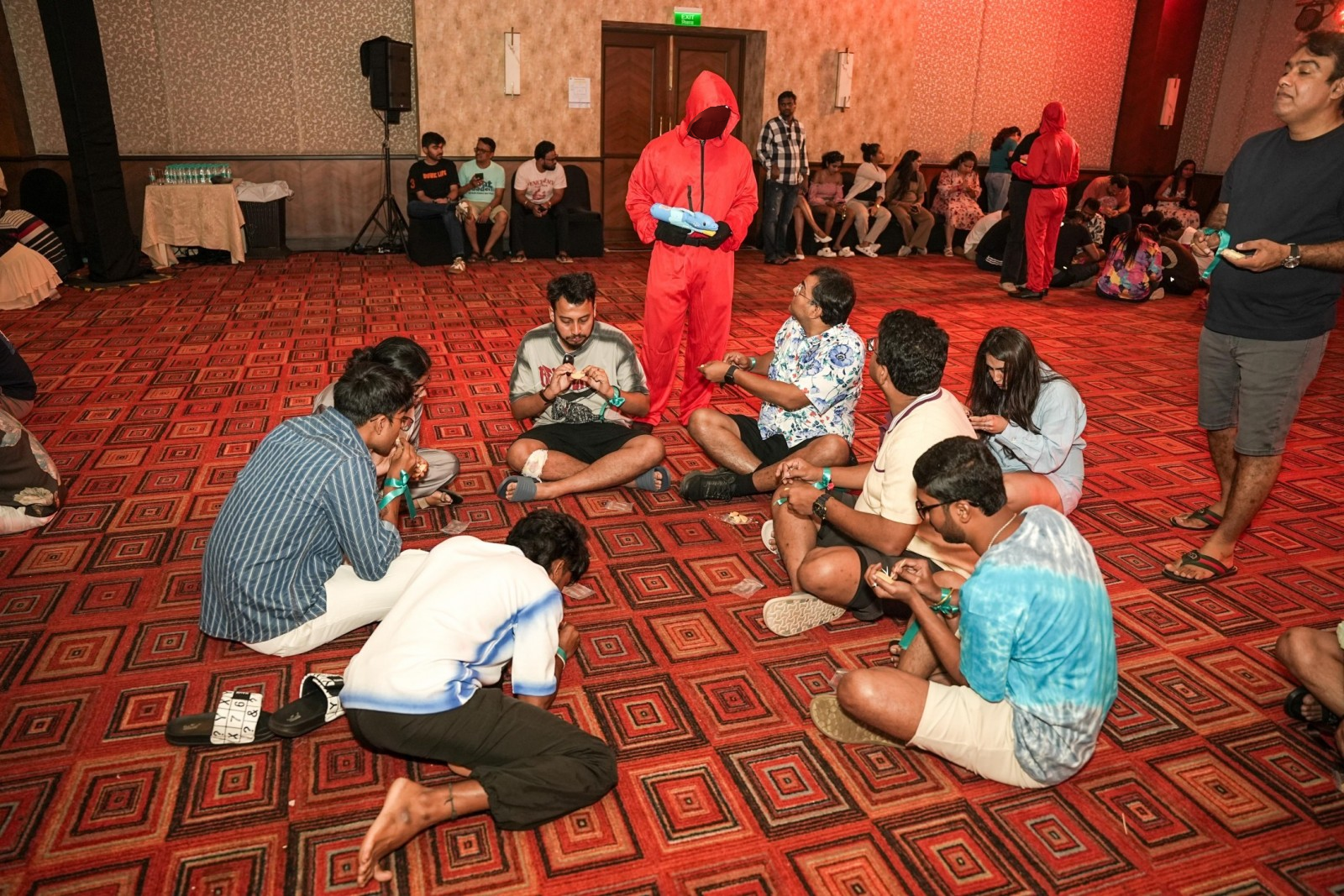
One often-overlooked part of large corporate event management is participant movement.
Imagine 500 employees finishing one activity and moving towards another zone at the same time. Without proper direction, this can create confusion and overcrowding.
A structured group movement plan helps avoid this problem.
Some useful arrangements include:
-
Dividing participants into colour-coded or numbered groups.
-
Providing clear activity instructions before each session.
-
Displaying activity schedules and zone information.
-
Assigning coordinators to guide participants.
-
Staggering activity start and end times where necessary.
-
Keeping sufficient time for movement between zones.
For larger events, signage and announcements can also help participants understand where they need to go next.
The objective is to make movement between activities feel natural rather than rushed.
7. Coordinating Entertainment and Technical Production
A large corporate event is not complete with activities alone. Entertainment and technical production often play an equally important role.
Depending on the event requirements, SOS Party can coordinate entertainment options such as:
-
Professional DJs.
-
Live music bands.
-
Drum Circle performances.
-
Dhol and nagada performances.
-
Fire shows.
-
Classical dance performances.
-
Professional anchors and emcees.
-
Stand-up comedians.
-
Celebrity appearances.
-
Motivational speakers.
These performances can be scheduled between activities, during breaks or as part of the main event programme.
Technical production also needs careful coordination. Stage arrangements, sound systems, lighting, LED walls, microphones, branding and other equipment should be planned according to the venue and programme requirements.
When activities, entertainment and production are coordinated together, the event feels more connected and professionally managed.
8. Keeping Food, Refreshments and Guest Arrangements on Schedule

Food and hospitality are also important parts of large corporate events.
When hundreds of employees participate in activities, lunch and refreshments need to be coordinated without creating long queues or disrupting the programme.
Event planning may include:
-
Welcome refreshments and beverages.
-
Buffet lunch arrangements.
-
Hi-tea and evening snacks.
-
Dining space allocation.
-
Vegetarian and other dietary preferences.
-
Water stations across activity areas.
-
Guest assistance and venue coordination.
Breaks should be included in the activity schedule so participants have enough time to relax, eat and prepare for the next session.
9. Preparing for Unexpected Changes
Even with detailed planning, corporate events can experience unexpected changes.
An outdoor activity may need to be adjusted due to weather conditions. A performance may take longer than expected. Equipment may require troubleshooting, or participant numbers may change.
A flexible event plan helps manage such situations.
Important considerations include:
-
Alternative indoor spaces for suitable outdoor activities.
-
Backup equipment for critical technical requirements.
-
Buffer time in the event schedule.
-
Clear communication between coordinators.
-
Alternative activity options where practical.
-
A defined process for handling last-minute changes.
The objective is not to assume that everything will go exactly as planned. It is to be prepared to respond without affecting the overall participant experience.
10. Bringing Everything Together for a Memorable Closing
The closing experience is just as important as the opening of a corporate event.
After several hours of activities, employees should have an opportunity to come together, celebrate participation and enjoy the final moments.
This can include team awards, recognition ceremonies, group photographs, entertainment, DJ sessions and closing announcements.
A well-planned closing brings different activity experiences together and gives participants a shared moment to remember.
Example of Managing Multiple Activities for 500 Corporate Participants

To understand how this works in practice, consider a hypothetical corporate event for 500 employees. Instead of asking all participants to complete the same activity together, the event can be divided into smaller groups.
For example, the organisers could create 10 groups of 50 participants each. These groups can rotate through different activity zones according to a planned schedule.
| Group arrangement | Participants |
| Total participants | 500 |
| Number of groups | 10 |
| Participants per group | 50 |
| Activity zones | 5 |
| Groups assigned per rotation | 2 per zone |
Each activity zone can accommodate two groups, subject to the space and activity format.
A rotation system allows participants to experience different activities while keeping the programme organised.
For example:
-
Rotation 1 – Amazing Race and outdoor challenges.
-
Rotation 2 – Problem-solving and collaborative games.
-
Rotation 3 – Creative workshops and The Big Picture.
-
Rotation 4 – Drum Circle and Boomwhackers.
-
Rotation 5 – Build and Race F1 Cars or other group competitions.
The actual number of zones, groups and rotations will depend on the activity duration, venue capacity and available facilitators.
This approach helps create a structured experience while ensuring that participants have opportunities to take part in different activities.
Common Mistakes to Avoid When Managing Multiple Corporate Event Activities
Even a well-planned event can become difficult to manage if certain details are overlooked.
Here are some common mistakes worth avoiding.
1. Scheduling too many activities
More activities do not automatically mean a better event. A realistic schedule gives participants enough time to enjoy each experience.
2. Ignoring venue capacity
Each activity needs sufficient space, equipment and safe participant movement. The venue should be evaluated before finalising the programme.
3. Using the same activity format throughout
A mix of physical, creative, interactive and entertainment-based experiences makes the event more interesting for different participants.
4. Not assigning clear responsibilities
Every activity zone and event function should have clearly defined responsibilities to avoid confusion during execution.
5. Ignoring transition time
Moving participants between activity areas takes time. This should be included in the schedule.
6. Forgetting technical requirements
Microphones, speakers, lighting, screens and activity equipment should be checked before the event begins.
7. Having no backup plan
Weather changes, technical issues and unexpected delays can happen. Contingency planning helps the event continue smoothly.
Why Choose SOS Party for Large Corporate Event Management?
Managing a large corporate event requires coordination across multiple functions. The challenge is not simply arranging activities but ensuring that every element works together.
SOS Party helps businesses plan corporate experiences that can include team-building activities, employee engagement programmes, entertainment, event production, branding and logistics.
With experience serving 3,500+ happy teams and 7,50,000+ participants, SOS Party understands the importance of designing corporate experiences around different group sizes and event requirements.
Here is what companies can explore with SOS Party:
-
Multiple team-building activities: From Amazing Race and Corporate Spartans to creative challenges, music-based activities and collaborative games.
-
Corporate event entertainment: DJs, live bands, professional anchors, dhol performances, comedians and other entertainment options.
-
Event production and technical support: Stage setups, sound, lighting, LED walls, branding, décor and technical arrangements.
-
Venue coordination: Event venue options for corporate outings, offsites, celebrations and large gatherings.
-
Transportation and logistics: AC buses and Innovas from Delhi, Gurgaon, Noida and Faridabad, depending on the event requirements.
-
Customised event schedules: Programmes designed around the number of participants, event duration and company objectives.
Whether you are organising a corporate event for 100 employees or planning a large gathering with 500+ participants, the event structure can be customised to suit your requirements.
Conclusion: Make Every Moment Count, Even at 500+ Participants
A successful large corporate event is not just about bringing hundreds of employees together—it’s about creating an experience where everyone feels involved, every activity runs smoothly, and every moment adds value. From coordinating multiple activity zones to managing schedules, entertainment, technical production, and participant movement, the right planning turns a complex event into a seamless celebration.
At SOS Party, we bring people, activities, and experiences together with thoughtful planning and expert coordination. Whether you're organising a corporate offsite, team-building day, annual celebration, or a large-scale employee engagement event, we help make every detail count.
Because a great corporate event isn't remembered for how many people attended—it's remembered for how many people enjoyed every moment.
Planning an event for 100, 500, or even 1,000+ employees? Let SOS Party take care of the coordination while your team focuses on making memories!


 Tailored for teams
 Hassle free booking
 Dedicated event planner