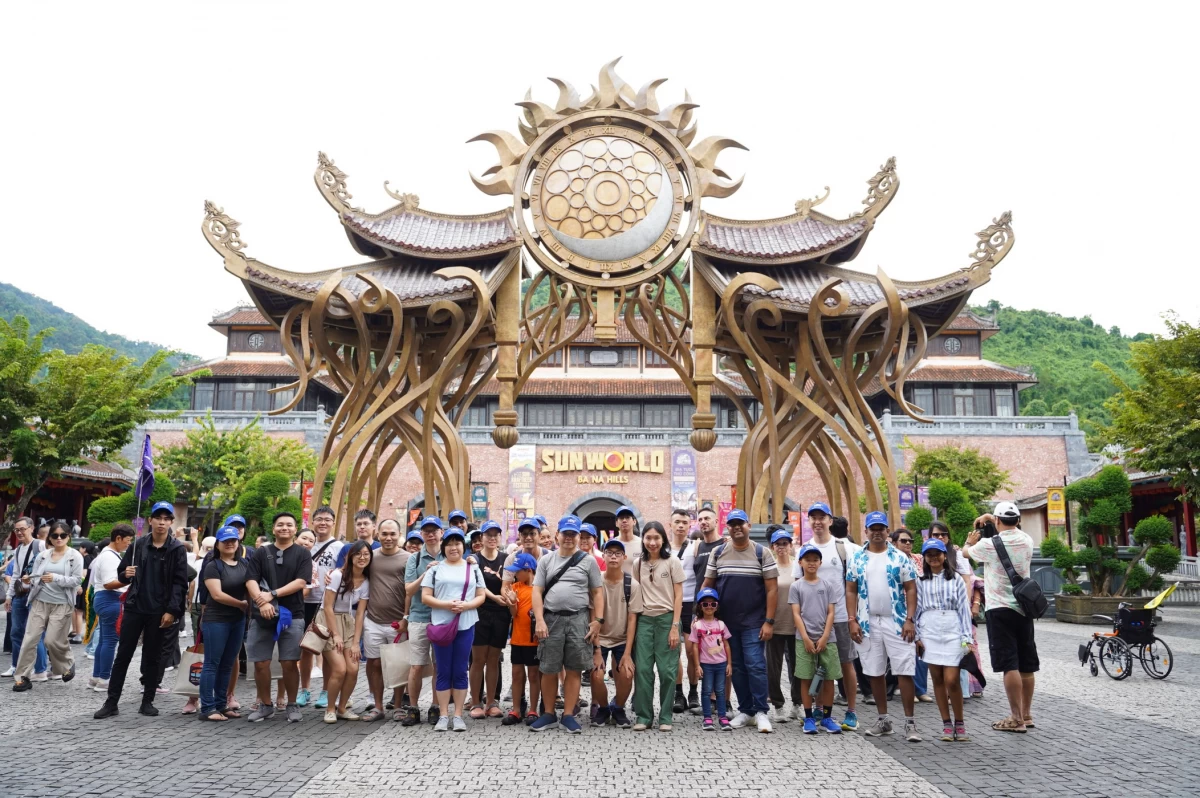


Goa or Vietnam: which is better for a corporate offsite from India?
The short answer is simple. Choose Goa when the priority is a shorter two-night programme, easier travel, lower total cost and dependable event execution. Choose Vietnam when the company wants a three-night international incentive with a stronger sense of discovery, cultural immersion and destination prestige.
That does not mean Goa is the “budget” choice and Vietnam is automatically the “premium” choice. A high-production gala at The St. Regis Goa Resort or ITC Grand Goa can cost more than a well-negotiated Vietnam programme. Equally, a Vietnam itinerary that changes hotels every night can look attractive on paper but become exhausting in practice.
The right choice depends on group size, departure cities, rooming pattern, event objectives, travel tolerance, season and the amount of time the company can take away from work.
This guide compares a two-night corporate offsite in Goa with a three-night corporate offsite in Vietnam from a corporate planning perspective. It covers indicative budgets, flights from major Indian metros, seasons, hotels, meeting infrastructure, activities, logistics and the type of company requirement each destination serves best.
The SOS Party verdict in one minute
Choose Goa for:
- Two-night annual offsites and leadership retreats
- Groups with employees travelling from several Indian cities
- Conferences with substantial stage, sound, light, décor or artist production
- Groups that need predictable food, beverage and entertainment options
- Companies seeking the best balance of budget, attendance and ease of execution
- Large teams that cannot spend an extra working day in transit
Choose Vietnam for:
- Three-night incentive travel and reward programmes
- Teams looking for a first international offsite from India
- Founder, leadership, sales and high-performer groups
- Programmes where sightseeing and cultural discovery are central to the brief
- Companies that want higher perceived value and a more memorable destination reveal
- Teams comfortable with passports, visas, immigration and more structured movement
Our overall view:
Goa wins on convenience and absolute cost. Vietnam wins on novelty and experiential value. For a routine annual offsite, Goa is usually the more efficient decision. For a milestone, incentive or “we want this year to feel different” brief, Vietnam is the stronger choice.
A fair comparison: two nights in Goa versus three nights in Vietnam
A like-for-like comparison needs to acknowledge one important difference: Goa works well in 2 nights and 3 days, while Vietnam needs 3 nights and 4 days to justify the international travel.
A typical Goa programme can include arrival, a conference, a team-building experience, one gala night and some leisure time without feeling rushed. Vietnam adds visa and immigration time, longer airport reporting, and in many itineraries an intercity road transfer. Compressing Vietnam into two nights usually damages the experience and weakens its value for money.
For planning purposes, we recommend:
- Goa: 2 nights / 3 days
- Hanoi and Ha Long Bay: 1 night Hanoi + 1 night InterContinental Ha Long Bay + 1 night Ambassador Cruise
- Da Nang and Hoi An: 2 nights Da Nang + 1 night Hoi An
- Ho Chi Minh City and Ho Tram: 1 night Ho Chi Minh City + 2 nights Ho Tram
What does a corporate offsite in Goa cost?
For an 80-150 person group travelling from Delhi, Mumbai or Bengaluru, a professionally managed two-night Goa offsite will usually fall into the following planning bands:
Premium four-star or value-led five-star programme: approximately INR 50,000-75,000 per person
Luxury five-star programme: approximately INR 70,000-95,000 per person
These ranges assume economy return flights, twin-sharing accommodation, airport transfers, scheduled meals, one conference or business session, one team-building experience, one gala evening and moderate event production.
Goa becomes more expensive during long weekends, December, New Year, major festivals and high-demand wedding dates. Single occupancy, premium alcohol, celebrity artists, elaborate décor, large LED installations, beach permissions and late bookings can move the budget significantly.
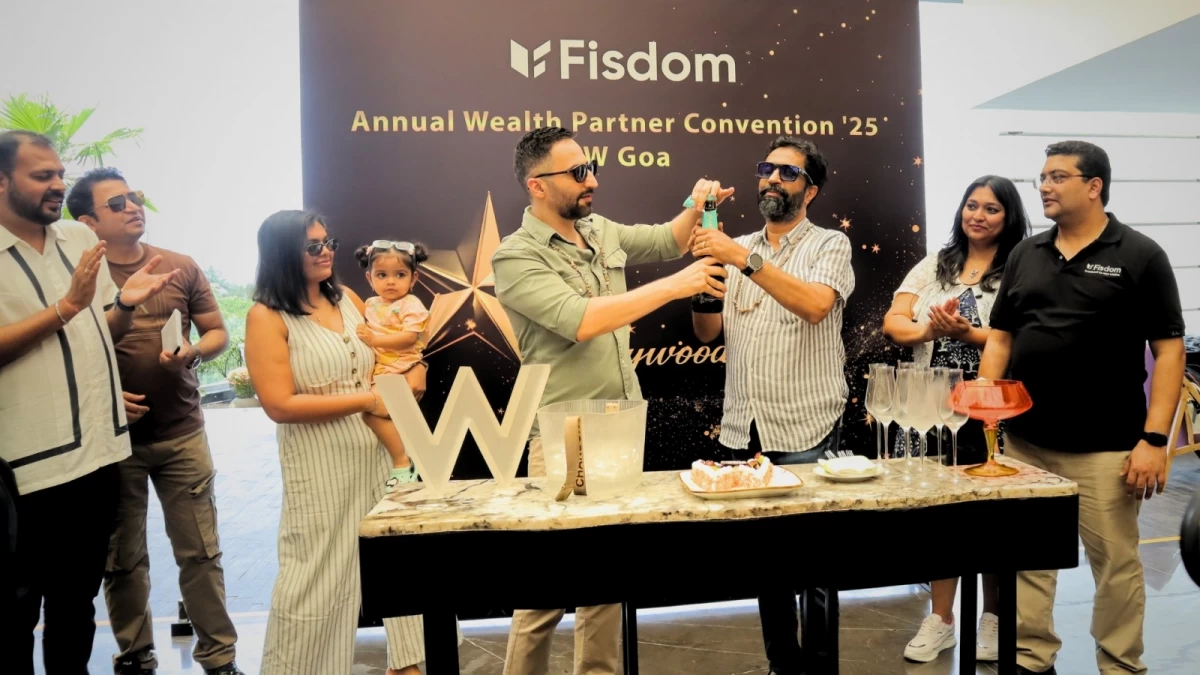
The advantage is that nearly every cost component can be scaled. A company can reduce room category, production, beverages or external entertainment without breaking the destination experience.
What does a corporate offsite in Vietnam cost?
For an 80-150 person group, a three-night Vietnam programme generally requires a larger total budget:
- Hanoi + Ha Long Bay: with InterContinental stays and an Ambassador overnight cruise: approximately INR 90,000-1,35,000 per person
- Da Nang + Hoi An: approximately INR 85,000-1,15,000 per person
- Ho Chi Minh City + Ho Tram: approximately INR 90,000-1,20,000 per person
These are indicative planning ranges, not live quotations. They assume economy airfare from a major Indian metro, twin-sharing rooms, the Vietnam e-visa fee, private group transport, scheduled meals, one business session, one team-building or destination experience, one gala evening and moderate production.
Vietnam’s hotels, meals, transport and local experiences can offer excellent value. The higher overall cost comes from the international airfare, third hotel night, visa, immigration handling and intercity movement. However, the perceived value is also higher: employees receive an international trip, a new culture and a destination story that feels meaningfully different from a domestic offsite.
The official Vietnam e-visa portal currently lists a fee of USD 25 for a single-entry e-visa and USD 50 for a multiple-entry e-visa, with validity of up to 90 days. Corporate groups should still apply well in advance and verify every passport detail before ticketing and travel.
Goa for corporate offsites: where it is strongest
Goa remains India’s most dependable fly-in beach destination for corporate events. It has deep hotel inventory, experienced production vendors, artists across genres, transport fleets, event permissions expertise and a mature ecosystem for conferences, team building and gala nights.
The most important planning decision is not simply “Goa”; it is South Goa or North Goa.
South Goa: better for contained resort offsites
South Goa is usually our first recommendation when the company wants delegates to stay together, attend meetings, participate in team building and enjoy a private gala within one resort ecosystem.
It is quieter, more spacious and better suited to residential conferences. Beach access and resort lawns make it easier to create a programme that feels private. The trade-off is that external nightlife and restaurant-hopping are less convenient, and airport choice must be managed carefully.
ITC Grand Goa, a Luxury Collection Resort & Spa
ITC Grand Goa is suited to premium leadership offsites, large conferences and gala-led programmes. It combines direct beach access, large landscaped grounds, indoor meeting venues and outdoor lawns. Official hotel information lists seven indoor and three outdoor event venues, making it strong for programmes that need plenary sessions, breakouts, team building and a high-production dinner in one property.
Best for: premium conferences, leadership summits, multi-format events, 150-500 person groups and programmes requiring sophisticated production.
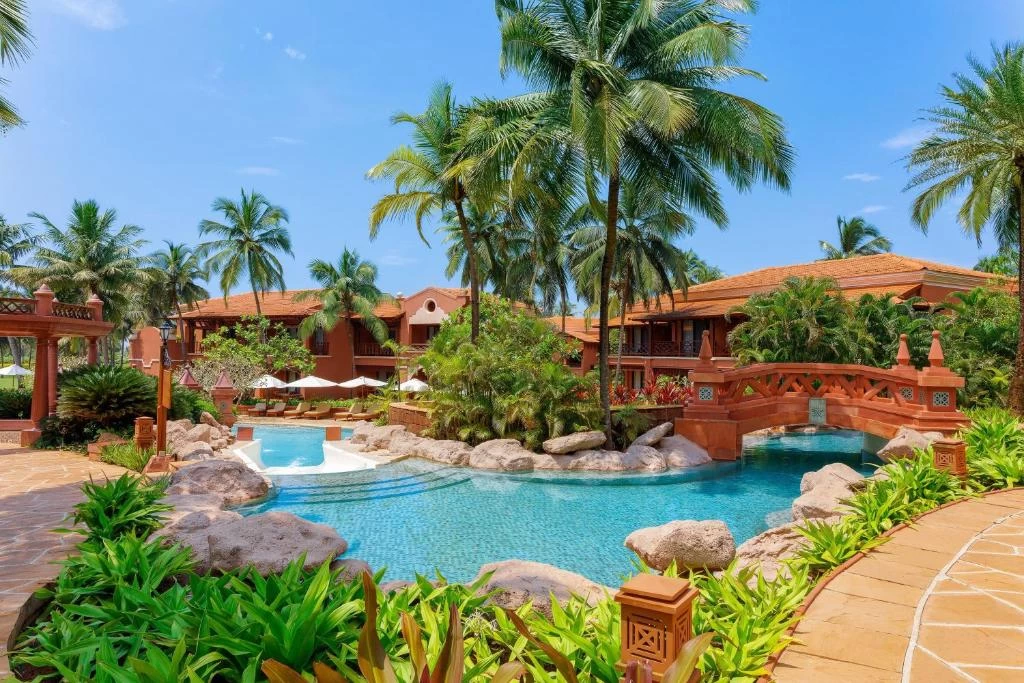
The St. Regis Goa Resort
The St. Regis is the luxury benchmark for a high-touch Goa offsite. The resort lists seven event rooms, 1,433 sq m of total event space and a largest-space capacity of 600. It works best when service, food, setting and executive experience matter more than the lowest possible room rate.
Best for: CXO retreats, rewards and recognition, luxury incentives, important client gatherings and premium gala nights.
Caravela Beach Resort
Caravela is one of South Goa’s most practical corporate-offsite properties. It offers direct beach access, lawns, meeting venues, a golf course and the possibility of a more contained group experience. Its Varca ballroom configuration is suited to mid-sized conferences, while the outdoor inventory works well for team building and cocktail dinners.
Best for: 80-250 person residential conferences, value-conscious five-star programmes, full or partial buyouts and teams that want both beach and meeting infrastructure.
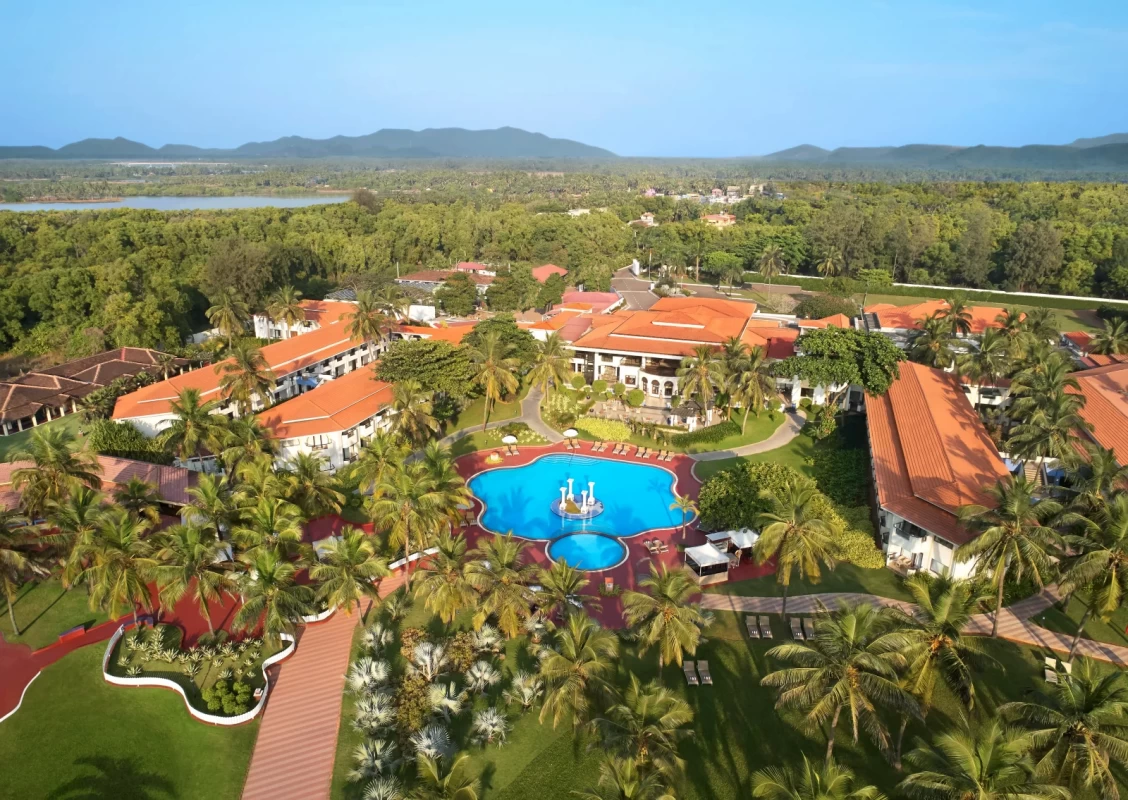
Holiday Inn Resort Goa
Holiday Inn Resort Goa is a dependable choice for companies that want a beachfront resort, strong food familiarity and a more controlled budget than the ultra-luxury properties. Its Mobor location is especially useful for contained offsites where most of the programme remains at the hotel.
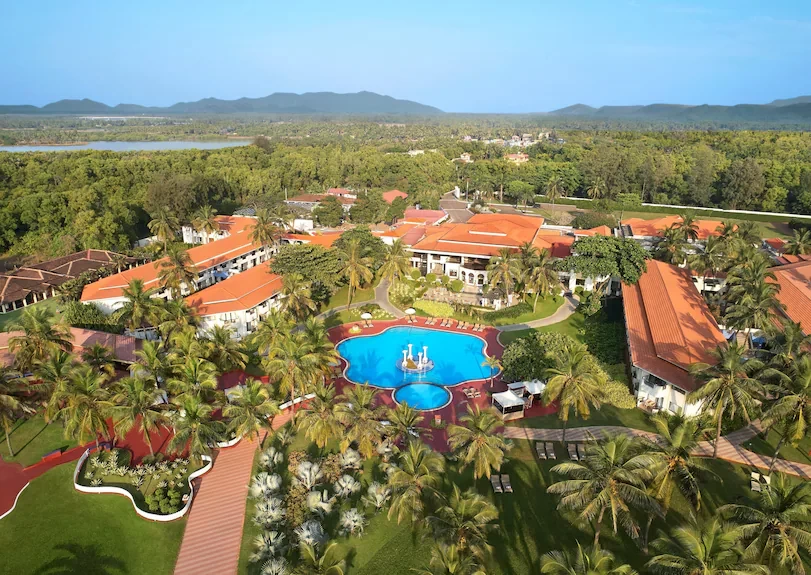
Best for: mid-sized conferences, sales meets, team offsites and companies prioritising value, beach access and reliable hospitality.
Novotel Goa Dona Sylvia Resort
Novotel Goa Dona Sylvia has a low-rise, village-style layout that feels relaxed and works well for informal bonding. It is a sensible option when the programme needs lawns, cottages, beach proximity and a resort atmosphere without moving into the top luxury price band.
Best for: culture offsites, team-building-led programmes, younger teams and companies that want a casual, social resort environment.
Planet Hollywood Beach Resort Goa
Planet Hollywood suits a high-energy audience. Its Cinema Paradiso ballroom can host approximately 260 guests theatre-style and 300-320 for cocktails, according to the hotel’s venue chart. The visual identity, pool and beach setting make it easy to create a lively awards or entertainment-led programme.
Best for: young workforces, sales celebrations, themed evenings, music-led events and 100-250 person groups.
The Zuri White Sands, Goa Resort & Casino
The Zuri White Sands is a strong large-resort option in Varca with beach access, lawns, recreation and a substantial inventory for residential groups. It is often commercially competitive for its category and gives planners flexibility across meetings, outdoor activities and gala formats.
Best for: large team offsites, sales conferences, sports and team-building programmes, and companies seeking a full-service resort at a competitive five-star price.
North Goa: better for access, nightlife and high-energy programmes
North Goa works best when the offsite needs a stronger mix of conference time and destination nightlife. It gives easier access to Panaji, Candolim, Vagator, restaurants, bars, casinos and entertainment venues. It can also suit groups arriving through Manohar International Airport at Mopa.
The trade-off is fragmentation. Traffic can make seemingly short movements unpredictable, and a poorly planned North Goa itinerary can spend too much time in coaches.
Grand Hyatt Goa
Grand Hyatt Goa is one of the strongest large-format MICE hotels in the state. Its official fact sheet describes a 1,150 sq m pillar-free Grand Ballroom, divisible into three sections, plus 680 sq m of flexible meeting rooms and boardrooms. The resort format and Bambolim location create a good balance between privacy and access.
Best for: 200-800 person conferences, multi-track meetings, large gala dinners, leadership conventions and events requiring robust indoor infrastructure.
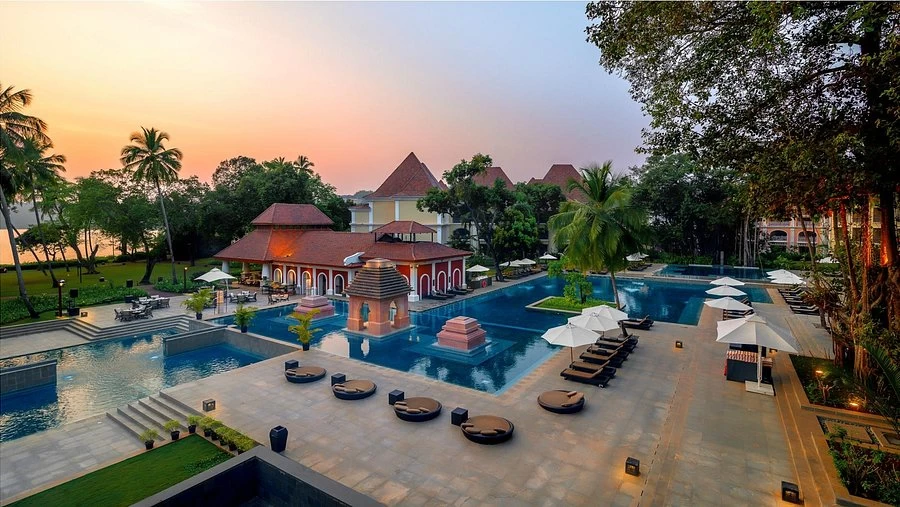
Taj Cidade de Goa Horizon
Taj Cidade de Goa Horizon is a major conference hotel. Its Assembleia venue is listed at 1,000 sq m and up to 1,200 guests for a reception, with supporting meeting rooms and boardrooms. It is one of Goa’s clearest choices for a large plenary, substantial stage build or conference with multiple session formats.
Best for: large conferences, town halls, dealer meets, product launches and 300-1,000 person gatherings.
Taj Cidade de Goa Heritage
The Heritage wing offers more character and a stronger sense of place. Its event inventory is smaller than Horizon’s, but the Portuguese-inspired design and seafront atmosphere suit more intimate programmes. The two properties can also be considered together when room inventory and event variety are important.
Best for: leadership groups, cultural themes, senior management offsites and programmes that value atmosphere over ballroom scale.
W Goa
W Goa is built for a stylish, social and younger audience. The Great Room has a listed capacity of 250, making the property better for small-to-mid-sized programmes than very large conferences. Its Vagator setting gives a strong reveal and nightlife story.
Best for: founder retreats, creative teams, rewards travel, leadership offsites and premium groups below roughly 200-220 delegates.
Goa Marriott Resort & Spa
Goa Marriott combines a resort atmosphere with access to Panaji. The property lists 15 event rooms and a largest-space capacity of 400. It is particularly useful when the programme includes meetings, city access, casinos or external dinners.
Best for: business-heavy offsites, dealer meets, 100-350 person conferences and teams that want a central location.
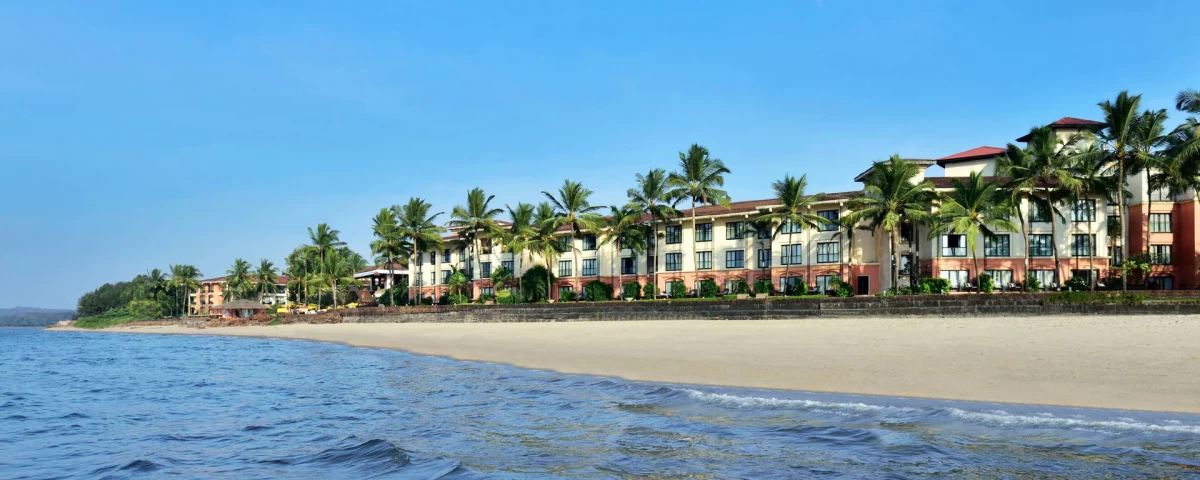
Hilton Goa Resort
Hilton Goa Resort is a hilltop property rather than a beachfront resort. It has 104 rooms, six meeting rooms and two outdoor lawns, with a listed largest-room area of 360 sq m. Its inventory naturally suits groups that can take a meaningful share of the hotel.
Best for: 50-100 person leadership or team offsites, partial buyouts, focused meetings and groups seeking a calmer North Goa base.
DoubleTree by Hilton Goa
Companies should specify which DoubleTree they mean. DoubleTree by Hilton Goa - Panaji has 160 rooms, four meeting rooms and Mandovi River-facing outdoor space, making it useful for business-led programmes. DoubleTree by Hilton Goa - Arpora - Baga has a smaller room inventory and a listed ballroom capacity of 224, placing it closer to North Goa’s leisure and nightlife belt.
Best for: value-led corporate groups, 60-180 person meetings and teams prioritising Panaji access or the Baga-Arpora area.
Goa seasons: when should a corporate group travel?
The Goa Tourism Development Corporation identifies October to March as the most pleasant and popular period, with generally clear skies. For corporate events, the season can be divided more practically:
- Mid-September to early December: excellent weather and strong event conditions; rates rise around festivals and weddings.
- Mid-December to Mid January: peak demand, highest rates, minimum-stay restrictions and heavy traffic. Choose only when the date is non-negotiable.
- January-end to March: one of the best corporate windows, with pleasant weather and better operating predictability.
- April and May: hot and humid, but commercially attractive for indoor conferences and pool-led programmes.
- June to Mid-September: monsoon value season. Excellent for meetings and green-resort experiences, but every outdoor activity needs a real indoor backup. Rough seas may limit beach and water-based plans.
Flights and airport logistics for Goa
Goa has the simplest flight proposition in this comparison. It is connected to Delhi, Mumbai, Bengaluru, Hyderabad, Chennai, Kolkata, Pune, Ahmedabad and other Indian cities through regular domestic services.
However, Goa now has two airports:
- GOI - Dabolim Airport: generally more convenient for South Goa and parts of central Goa.
- GOX - Manohar International Airport, Mopa: generally more convenient for North Goa.
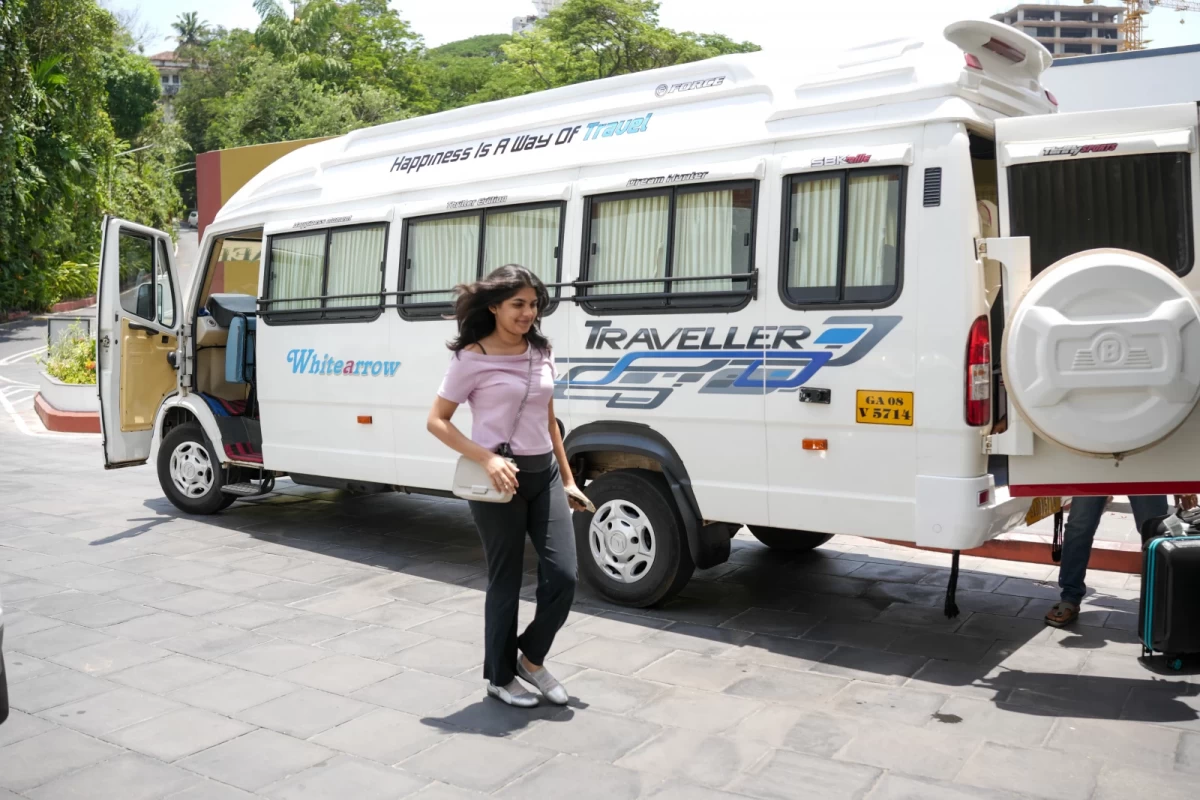
For a corporate group, the lowest airfare is not always the lowest landed cost. A cheaper flight into the wrong airport can add coach hours, tolls, late arrivals and fatigue. The event team should optimise airfare, arrival wave, hotel location and transfer time together.
What can a corporate group do in Goa?
Goa’s advantage is the ability to mix business and entertainment without overloading the itinerary:
- Beach Olympics, corporate sports leagues and custom team-building formats
- Goa City Race or heritage challenge in Panaji and Old Goa
- Beach treasure hunts and sustainability-led coastal activities
- Sunset cruise or private river cruise, subject to group size and operating permissions
- Portuguese quarter and Old Goa heritage exploration
- Spice plantation, culinary trail or local market challenge
- Leadership workshops, conferences and awards nights
- Live bands, DJs, stand-up comedy, mentalists and curated artist performances
- Off-property dinners at beach clubs, riverfront venues or private event spaces
Goa is also easier for large-format Indian event production. Fabricators, AV teams, emcees, artists and transport vendors are familiar with corporate schedules and late-stage changes. Music licensing, venue sound limits, beach permissions and outdoor weather plans still need professional handling.
Vietnam for corporate offsites: three routes that work
Vietnam should not be sold as one destination. Hanoi and Ha Long Bay, Da Nang and Hoi An, and Ho Chi Minh City and Ho Tram are three different corporate products.
Option 1: Hanoi and Ha Long Bay in three nights
Recommended split: 1 night Hanoi + 1 night InterContinental Ha Long Bay + 1 night Ambassador Cruise
This is the most distinctive itinerary in the comparison. Hanoi brings history, food and city energy; Ha Long Bay delivers the international incentive “wow” through limestone karsts and an overnight cruise.
Night 1: InterContinental Hanoi Westlake
InterContinental Hanoi Westlake gives the group a luxury arrival experience without putting them in the middle of the Old Quarter’s operational congestion. Its Grand Ballroom is listed for up to approximately 420 guests, making it suitable for a welcome session, leadership address or opening dinner.
A well-paced first day can include:
- Airport arrival and assisted immigration exit
- Hotel check-in and recovery time
- Short business session or welcome lunch
- Curated Hanoi experience in smaller groups
- Old Quarter food trail, cultural dinner or lake-side welcome evening
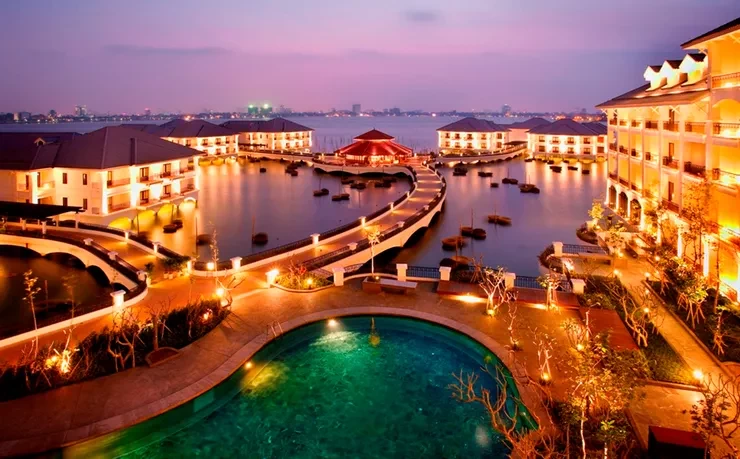
Night 2: InterContinental Ha Long Bay Resort
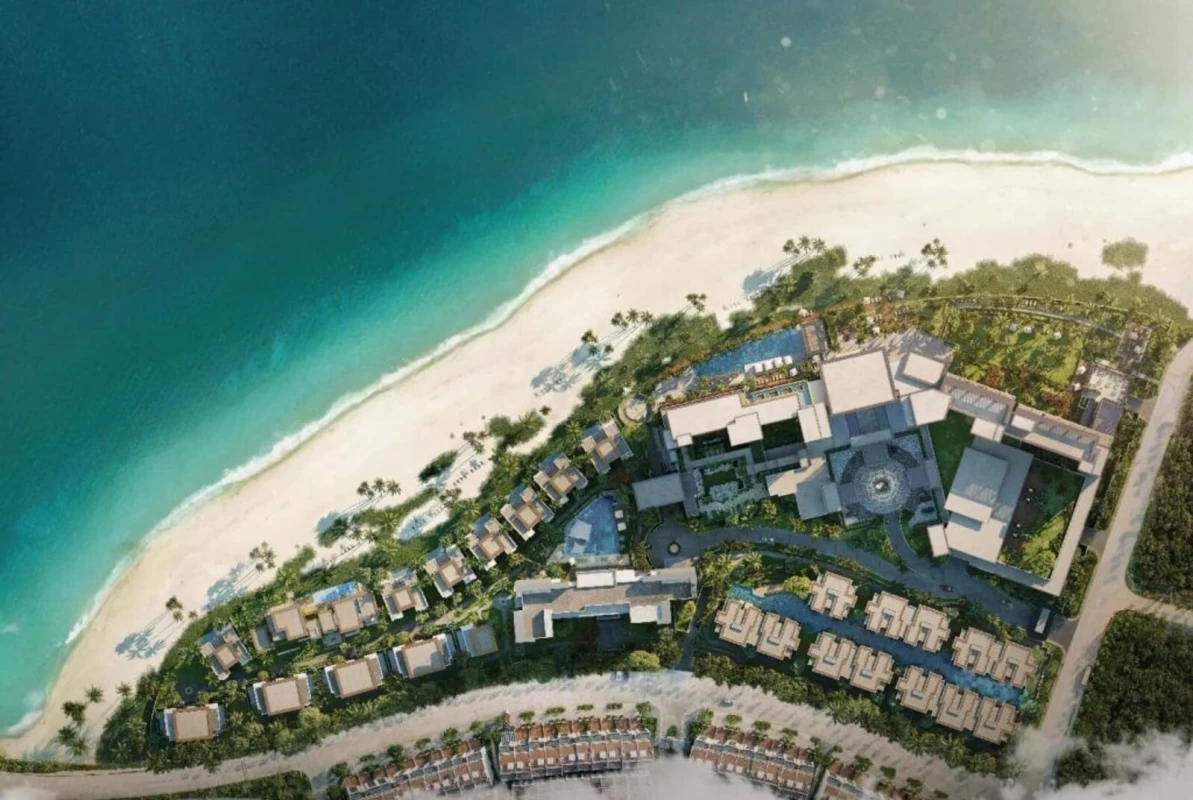
The newly opened InterContinental Ha Long Bay Resort significantly improves the destination’s corporate infrastructure. Its meeting spaces include hybrid capabilities, high-speed Wi-Fi and a large Tonkin Ballroom. Published venue information places the ballroom at up to 1,050 theatre-style, giving Ha Long Bay a serious conference option beyond cruise-only programmes.
This night is useful for the main conference, awards rehearsal, a controlled gala or a hotel-based team challenge before the cruise.
Night 3: Ambassador Cruise
An overnight cruise is the defining experience. Ambassador Cruise I is listed with 46 cabins, private balconies or terraces, large sundecks, dining, a piano lounge, bars, an outdoor Jacuzzi pool, spa facilities and MICE capability.
For a corporate group, the cruise can include:
- Welcome briefing and safety orientation
- Lunch while sailing into the bay
- Kayaking or cave visit, subject to the cruise route and weather
- Sunset networking on the sundeck
- Curated dinner, awards moments or acoustic entertainment
- Morning tai chi, breakfast and disembarkation
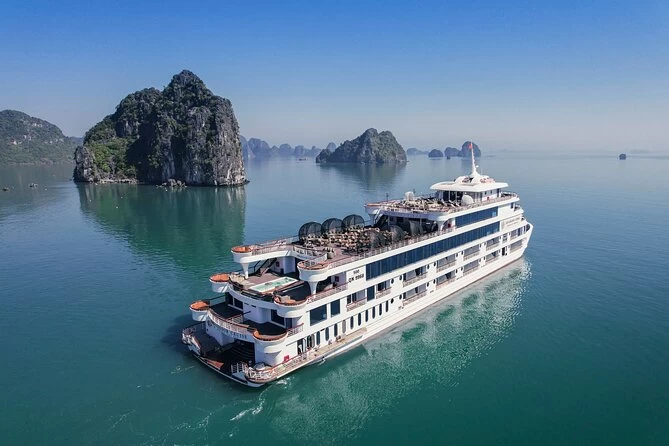
Critical group-size note: 46 cabins translates to a comfortable maximum of about 92 delegates on twin sharing before organiser room blocks and room-category constraints are considered. A 100-150 person group may require a second vessel, a charter strategy, split accommodation or an alternative one-night cruise format. This capacity question must be solved before flights are blocked.
Who should choose Hanoi and Ha Long Bay?
This route is best for incentive groups, leadership teams, top performers and companies seeking the strongest destination reveal. It is less suitable for programmes with a full-day conference plus multiple breakouts every day, because moving between Hanoi, Ha Long hotel and cruise adds operational complexity.
Best season for Hanoi and Ha Long Bay
Vietnam’s official tourism guidance recommends April-June and September-November for a better chance of pleasant conditions in Ha Long Bay. June-August can bring monsoon disruption and tropical storms, which may cause cruise changes or cancellations. December-March can be cool and misty; the scenery remains atmospheric, but the weather may not match a sun-and-sea expectation.
Option 2: Da Nang and Hoi An in three nights
Recommended split: 2 nights Da Nang + 1 night Hoi An
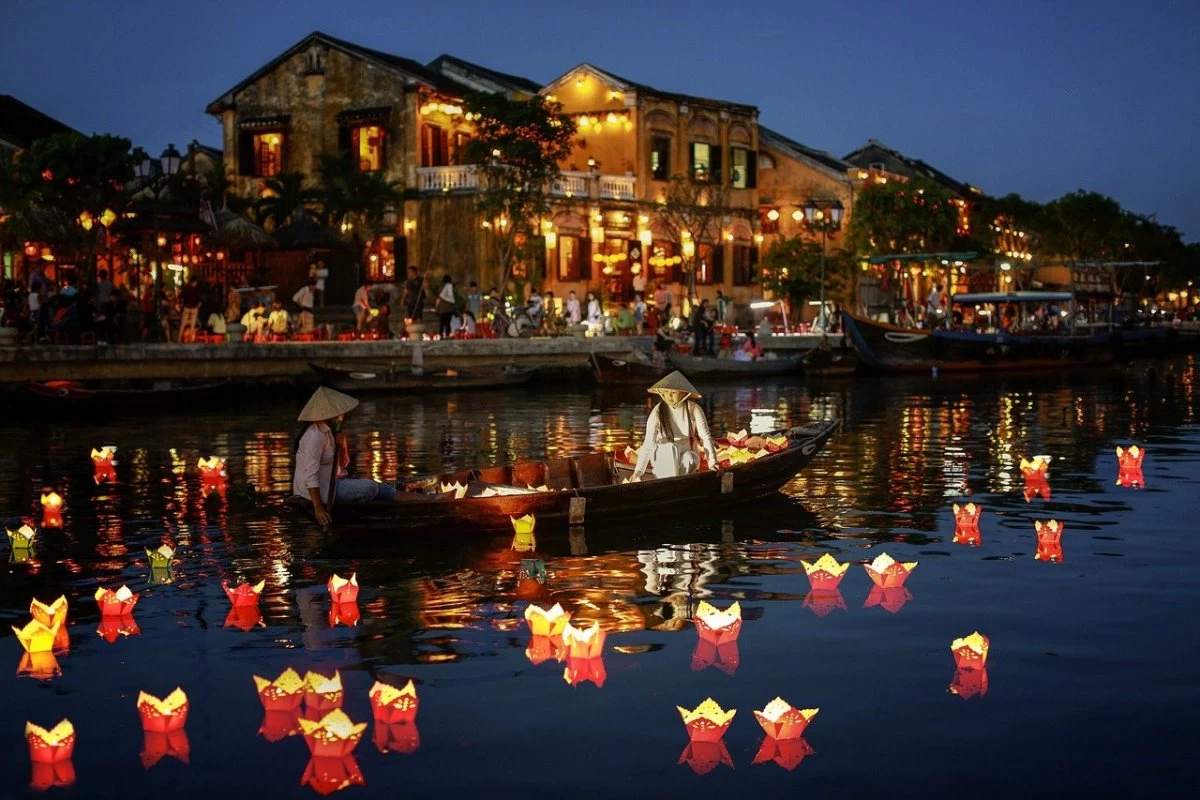
Da Nang and Hoi An offer the most balanced Vietnam programme for many Indian companies. Da Nang supplies airport access, beaches, international resorts and conference infrastructure. Hoi An adds heritage, lantern-lit streets, food and a memorable cultural evening.
Hoi An is not simply a photo stop. UNESCO describes Hoi An Ancient Town as an exceptionally well-preserved Southeast Asian trading port dating from the 15th to the 19th century, with indigenous and foreign influences visible in its buildings and street plan. That gives a corporate itinerary genuine cultural substance.

Corporate hotels in Da Nang
Strong options include:
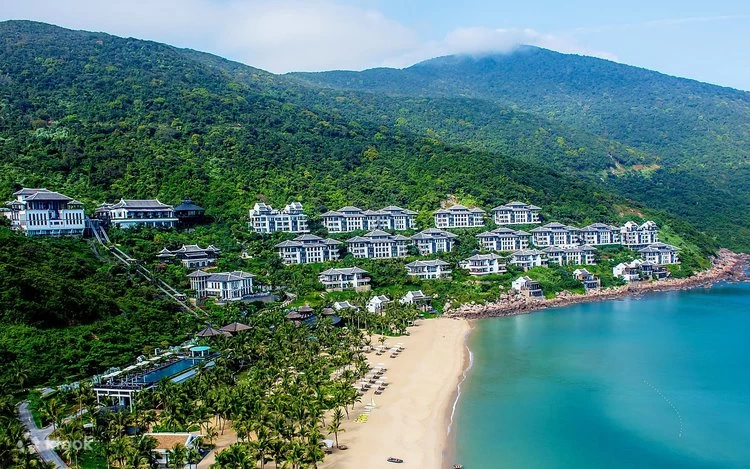
- Sheraton Grand Danang Beach Resort & Spa: a large-format resort with 15 event rooms and a listed largest-space capacity of 1,100; suitable for major conferences and large gala dinners.
- Danang Marriott Resort & Spa: six event rooms and a listed Grand Ballroom capacity of 550; suitable for premium mid-to-large corporate groups.
- Hyatt Regency Danang Resort and Spa: a resort-led option with a Regency Ballroom for up to 250 and beachfront venues for larger receptions; well suited to mid-sized incentives and team offsites.
- Courtyard by Marriott Danang Han River: a city-based option with 13 event rooms and a listed largest-space capacity of 380; useful when urban access and conference functionality matter more than a private beach.
One night in Hoi An
For the Hoi An night, companies can consider:
- Renaissance Danang Hoi An Resort & Spa: five event rooms and an outdoor lawn listed for up to 650; suitable for a resort gala combined with an Ancient Town visit.
- New World Hoiana Hotel / Hoiana Resort & Golf: a 476-room value-focused hotel connected to a wider integrated resort with ballrooms, lawns, beach venues, golf and MICE facilities.
The heritage experience should be designed in waves or smaller groups. Coaches cannot simply move through every part of the Ancient Town, and a 150-person group walking as one unit will reduce both comfort and authenticity.
Suggested three-night flow
- Day 1: Arrive in Da Nang, check in, welcome session and beachfront dinner
- Day 2: Conference, beach team building, gala or awards night
- Day 3: Marble Mountains, local experience or leisure; transfer to Hoi An; lantern-making, heritage walk and curated dinner
- Day 4: Breakfast and transfer to Da Nang International Airport
Things to do for corporate groups
- Beach team building and corporate sports
- Marble Mountains and Son Tra Peninsula
- Ba Na Hills and Golden Bridge, with careful queue and timing management
- Vietnamese cooking challenge
- Lantern-making workshop
- Hoi An heritage trail or photo challenge
- Basket-boat or countryside cycling experience for smaller groups
- Beachfront gala, resort lawn dinner or curated cultural performance
Best season for Da Nang and Hoi An
Official Vietnam tourism guidance identifies March-May as the best period for Hoi An. June-August can also work for beach-led programmes if the group is comfortable with heat. October-January brings more rain and the possibility of storms, so outdoor production and heritage movement need caution.
Who should choose Da Nang and Hoi An?
This is the best all-round Vietnam choice for a 100-300 person corporate group. It provides a clear conference day, a beach destination and a UNESCO heritage experience without the cabin limitations of an overnight cruise.
Option 3: Ho Chi Minh City and Ho Tram in three nights
Recommended split: 1 night Ho Chi Minh City + 2 nights Ho Tram
This route combines a fast, energetic commercial city with a large integrated beach resort. It is particularly effective for sales conferences, dealer meets and incentive groups that want nightlife, dining and a resort finale.
Night 1: Ho Chi Minh City
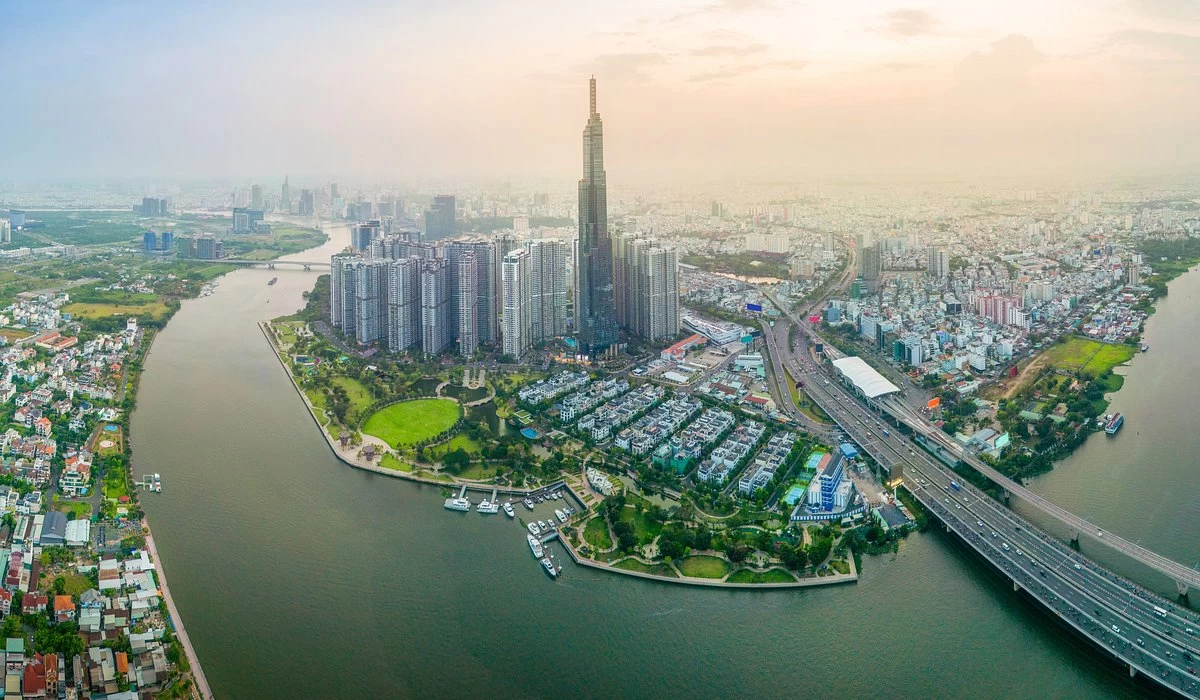
The city night should be purposeful rather than overloaded. Suitable corporate hotels include Le Méridien Saigon, which lists six event rooms and a largest-space capacity of 324; Pullman Saigon Centre, with six high-tech meeting rooms and capacity of up to 450 seats; and Sofitel Saigon Plaza, with seven meeting rooms and a largest listed capacity of 380.
The first evening can include a rooftop welcome, curated city dinner, short market experience or guided orientation. For a large group, the city works better through parallel experiences than one long convoy.
Nights 2 and 3: Ho Tram
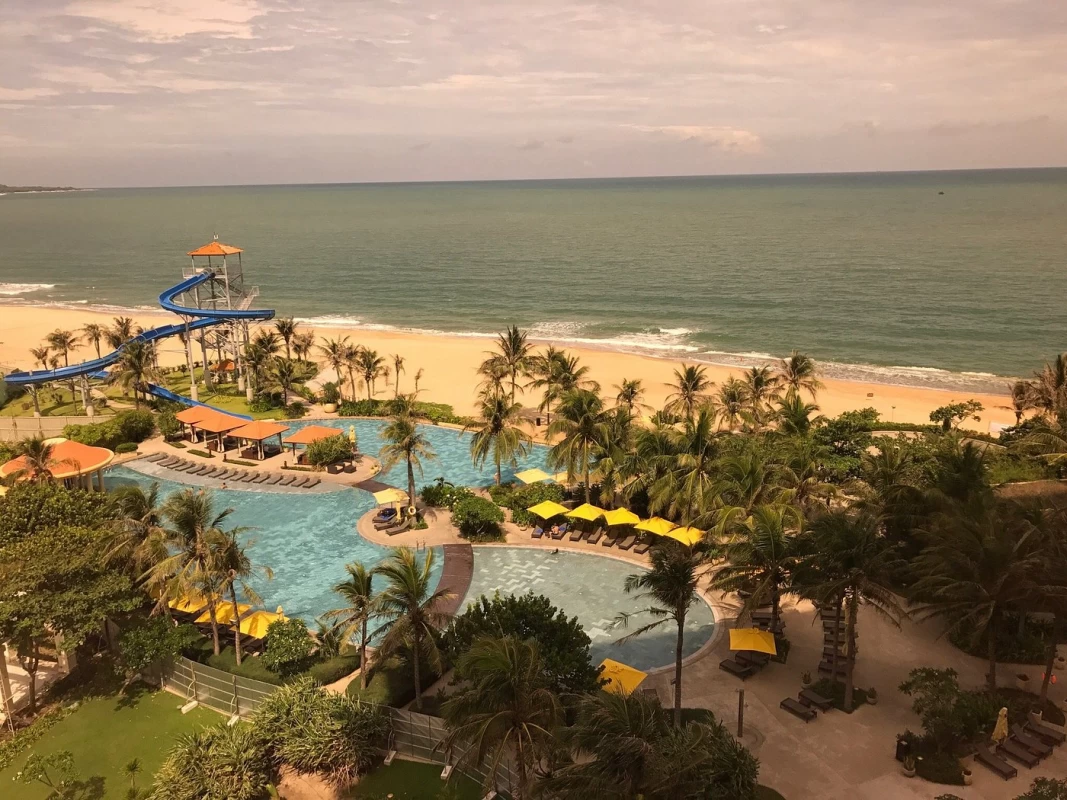
InterContinental Grand Ho Tram is the anchor property for this route. The wider Grand Ho Tram complex combines 538 InterContinental rooms with additional hotel inventory and resort facilities. Its pillarless ballroom is approximately 1,254 sq m, supported by meeting rooms, beach areas, golf and entertainment.
The transfer from Ho Chi Minh City to Ho Tram is typically planned as a two-to-three-hour coach movement depending on traffic and pickup point. The official Vietnam tourism website describes The Grand Ho Tram as approximately two hours from Ho Chi Minh City.
Suggested three-night flow
- Day 1: Arrive in Ho Chi Minh City, check in, city experience and welcome dinner
- Day 2: Transfer to Ho Tram with an en-route refreshment plan; resort check-in; team activity and social evening
- Day 3: Conference and breakouts; beach time or golf; gala and awards night
- Day 4: Breakfast and timed transfers to Ho Chi Minh City airport
Things to do for corporate groups
- Ho Chi Minh City orientation or culinary trail
- Cu Chi Tunnels for smaller or history-oriented groups, if schedule permits
- Rooftop networking and curated city dining
- Beach Olympics and team-building challenges in Ho Tram
- Golf at The Bluffs
- Resort entertainment and awards gala
- Wellness, spa and leisure tracks for incentive groups
Best season for Ho Chi Minh City and Ho Tram
December-April is generally the drier and more comfortable corporate window. The wet season can still work because showers are often concentrated, but outdoor schedules need buffer time and robust indoor alternatives.
Who should choose Ho Chi Minh City and Ho Tram?
This route is best for sales teams, dealer networks, reward programmes and larger groups that need serious conference infrastructure. It is less suitable for a relaxed leadership retreat if the city-to-resort transfer feels like unnecessary movement.
Flights from Indian metros: Goa versus Vietnam
Goa is easier for a nationally distributed workforce. Most major Indian metros have direct service, and multiple arrival waves can be managed across GOI and GOX when necessary.
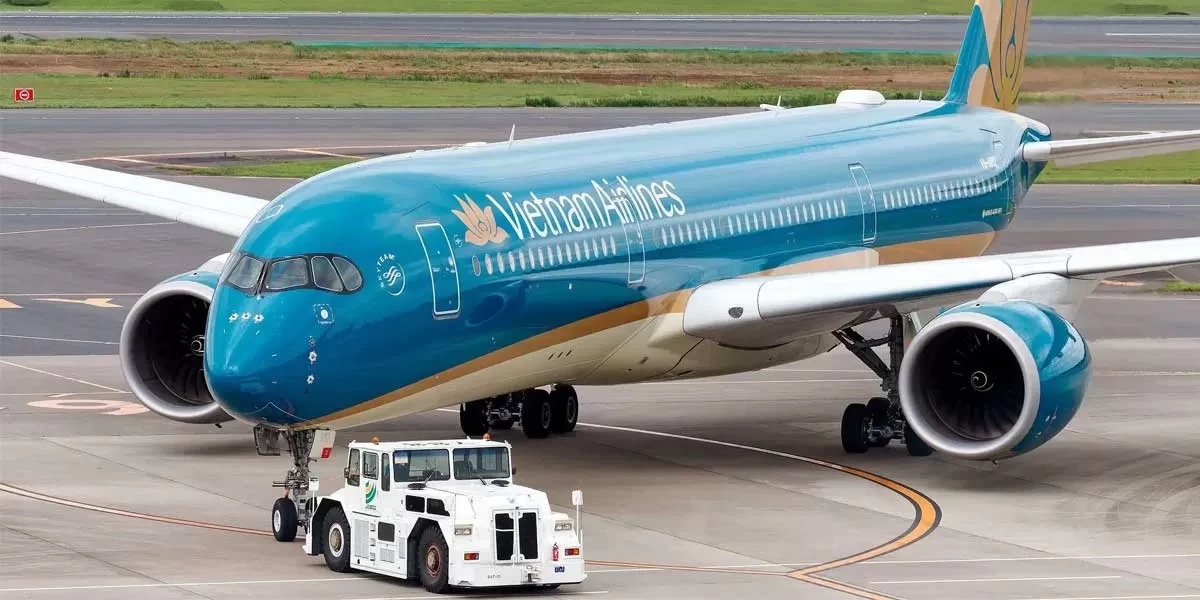
Vietnam’s strongest direct connectivity is generally into Hanoi and Ho Chi Minh City, especially from Delhi and Mumbai. Airline schedules also offer direct or connecting options from Bengaluru, Hyderabad, Kolkata, Ahmedabad and other cities, but frequencies vary by route and season. Delhi-Hanoi direct flying time is roughly four to five hours; Mumbai-Hanoi and Mumbai-Ho Chi Minh City direct sectors are also roughly five hours.
Da Nang usually requires a connection through Hanoi or Ho Chi Minh City for groups coming from India. That does not rule it out, but it makes schedule design and baggage protection more important.
For a group travelling from several Indian offices, companies have three workable strategies:
- Fly each city through the most practical Vietnam gateway and create staggered arrivals
- Consolidate domestic sectors in Delhi or Mumbai and travel internationally together
- Select the Vietnam route based on the city containing the largest share of delegates
The third option is usually the most cost-efficient. Airfare should be blocked before the hotel contract becomes non-refundable.
Infrastructure and execution: what changes internationally?
Goa has the more forgiving operating environment for an Indian corporate event. Additional equipment, artists, print material, staff or room changes can often be sourced locally at short notice.
Vietnam has excellent hotels and increasingly strong MICE infrastructure, but the execution model must be more deliberate:
- Passport names must match tickets and e-visas exactly
- Delegate data collection must begin earlier
- Indian food requirements should be contracted, not assumed
- Production specifications need local power, rigging and venue-rule validation
- Imported equipment and branded material may involve customs restrictions
- English-speaking guides, airport teams and coach captains must be rostered by arrival wave
- Road transfers require refreshments, washroom plans, luggage tagging and medical contingencies
- Currency, roaming, emergency contacts and travel insurance need clear delegate communication
This is where an experienced destination management and event partner creates value. The event is not only the gala or conference inside the hotel; it is the entire chain from passport collection and flight blocking to the last airport drop.
Goa vs Vietnam: corporate destination comparison
The budget bands below are planning estimates for an 80-150 person group, twin sharing, departing from a major Indian metro. They include economy flights, accommodation, scheduled meals, private transfers, a business session, one team-building or destination experience, one gala and moderate production. They exclude GST/TCS, alcohol upgrades, celebrity artists, extensive fabrication, single supplements and peak-date premiums.
|
Decision factor |
Goa - 2 nights / 3 days |
Vietnam - 3 nights / 4 days |
Corporate verdict |
|
Indicative total cost |
INR 40,000-65,000 premium; INR 60,000-95,000 luxury |
INR 75,000-1,35,000 depending on route and hotel mix |
Goa wins on absolute budget |
|
Travel complexity |
Domestic travel; no passport or visa |
Passport, e-visa, immigration and international check-in |
Goa is easier |
|
Flights |
Broad direct connectivity from major Indian metros |
Best into Hanoi or Ho Chi Minh City; Da Nang often one-stop |
Goa suits distributed teams |
|
Ideal duration |
2 nights |
3 nights minimum |
Goa uses less work time |
|
Destination novelty |
Familiar but highly flexible |
High novelty and international prestige |
Vietnam wins |
|
Hotel and ballroom depth |
Excellent, especially Grand Hyatt, Taj Horizon, ITC and St. Regis |
Excellent in Da Nang, Ho Tram, Hanoi and new Ha Long infrastructure |
Tie; choice depends on city and size |
|
Large-group scalability |
Strong for 100-1,000+ depending on hotel |
Strong in Da Nang and Ho Tram; cruise cabins limit Ha Long formats |
Goa, unless Vietnam hotel-led |
|
Production ecosystem |
Deep local vendor, artist and fabrication network |
Strong local MICE capability; more advance planning needed |
Goa is more forgiving |
|
Team building |
Beach games, city races, treasure hunts, sports and cruises |
Beach formats plus culture, heritage, food and destination discovery |
Vietnam offers more novelty |
|
Gala possibilities |
Beachfront, lawns, ballrooms, clubs and river venues |
Ballrooms, beach lawns, cruises, rooftops and cultural settings |
Vietnam has higher reveal value |
|
Weather risk |
Monsoon June-September; heat April-May |
Regional: storms affect Ha Long and Central Vietnam at different times |
Destination-specific planning required |
|
Food familiarity |
Easiest for Indian and mixed dietary needs |
Good in major hotels, but menus must be contracted carefully |
Goa wins |
|
Visa requirement for Indians |
No |
Vietnam e-visa required |
Goa wins |
|
Best use case |
Annual offsite, conference, team bonding, large production |
Incentive, milestone, leadership and high-performer travel |
Depends on objective |
Which destination should your company choose?
Choose Goa when budget and participation matter most
If the company wants maximum attendance, minimal documentation and two nights away from work, Goa is the rational choice. It is also better when the event itself is the hero: a major conference, awards ceremony, artist night or large-scale team-building experience.
Choose Vietnam when the destination is part of the reward
Vietnam becomes the stronger investment when the trip needs to signal recognition, ambition or a milestone. The additional cost buys more than another hotel night; it buys novelty, international exposure and a story employees are likely to remember and share.
Choose South Goa for privacy and programme control
South Goa is best when the hotel is the campus. It suits residential conferences, beach team building, leadership programmes and gala nights where movement outside the resort is limited.
Choose North Goa for energy and external experiences
North Goa is better for younger teams, nightlife, restaurants, casinos and city access. It requires stronger transport planning and tighter control over free time.
Choose Hanoi and Ha Long Bay for the strongest “wow”
This is the most cinematic option, especially with Ambassador Cruise. It is ideal for smaller incentive groups and leadership teams. Cabin inventory makes it less straightforward for large groups.
Choose Da Nang and Hoi An for the best-balanced Vietnam offsite
For most 100-300 person groups, Da Nang and Hoi An provide the cleanest combination of airport access, beach resort, conference infrastructure and cultural immersion.
Choose Ho Chi Minh City and Ho Tram for sales and large-format MICE
This route works when the company wants city energy followed by a full resort conference. Ho Tram’s integrated infrastructure is particularly useful for large gala, dealer and sales programmes.
How SOS Party manages Goa and Vietnam corporate offsites
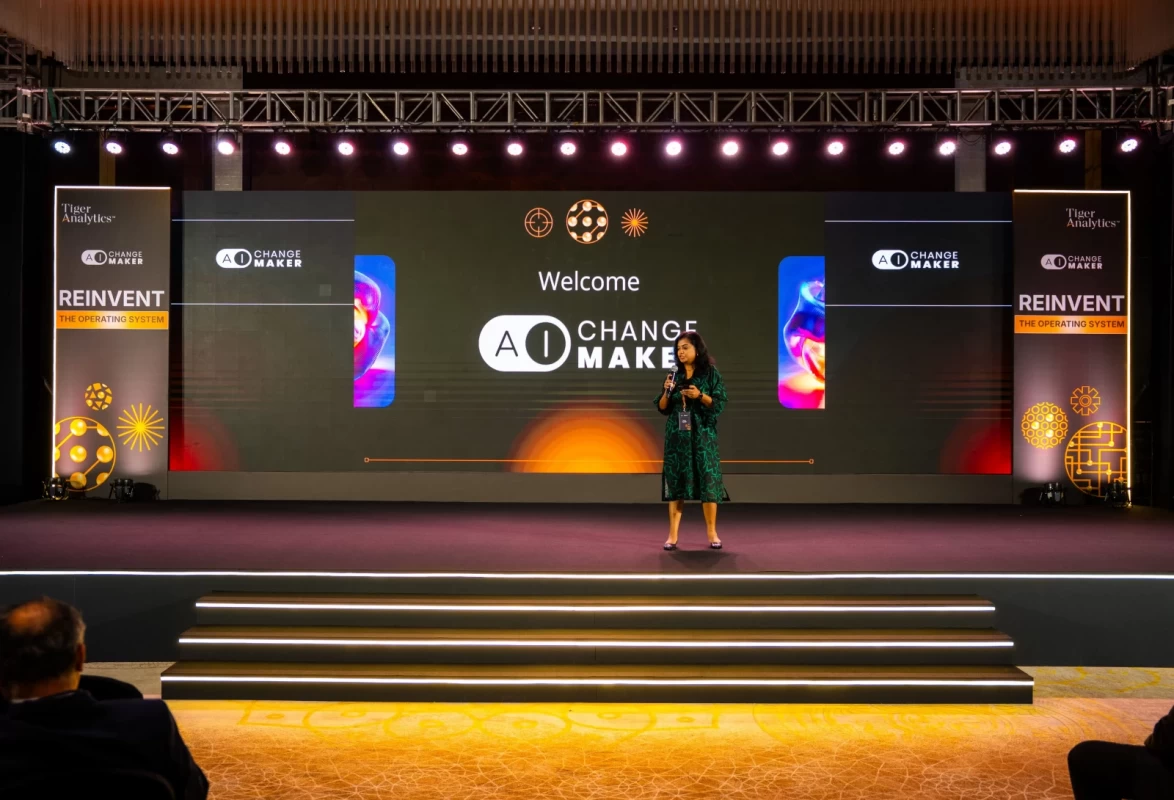
SOS Party frequently plans and executes corporate events and offsites in both Goa and Vietnam. Our role covers the complete delegate and event journey:
- Destination recommendation and feasibility
- Hotel sourcing, rate negotiation and contracting support
- Group flights and arrival-wave planning
- Passport, visa and traveller-data coordination for Vietnam
- Airport assistance, coaches and luggage movement
- Conferences, breakouts and meeting production
- Stage, sound, light, LED, décor and fabrication
- Emcees, live bands, DJs, performers and curated artists
- Team building, city races, cultural experiences and sightseeing
- Gala dinners, awards nights and themed events
- Food and beverage planning, including Indian dietary requirements
- On-ground staffing, help desks, medical readiness and contingency plans
- End-to-end budget control and reconciliation
The objective is not to sell the more expensive destination. It is to select the destination that best serves the group, then build an itinerary that works operationally and financially.
To receive a practical Goa-versus-Vietnam proposal, share five inputs with SOS Party: group size, departure cities, preferred month, rooming pattern and the main objective of the offsite. Visit SOS Party to start planning.
Sources and verification links
1. Vietnam National Electronic Visa System
2. Vietnam Tourism: Weather and Climate
4. UNESCO World Heritage Centre: Hoi An Ancient Town
5. InterContinental Hanoi Westlake: Meetings and Events
6. InterContinental Ha Long Bay Resort: Meetings and Events
7. Ambassador Cruise Gallery and Vessel Information
8. Sheraton Grand Danang Beach Resort: Events
9. Danang Marriott Resort & Spa: Events
10. Hyatt Regency Danang Resort and Spa: Meetings
11. The Grand Ho Tram: Meetings and Weddings
12. Goa Tourism Development Corporation: Weather of Goa
14. The St. Regis Goa Resort: Events
15. Caravela Beach Resort: Meetings and Events
16. Planet Hollywood Beach Resort Goa: Meetings and Events
17. Grand Hyatt Goa: Official Fact Sheet
18. Taj Cidade de Goa Horizon: Meeting and Event Venues
19. W Goa: Events
20. Goa Marriott Resort & Spa: Events
21. Hilton Goa Resort: Meetings and Events
22. DoubleTree by Hilton Goa - Panaji: Meetings and Events
Pricing disclaimer: All budgets are indicative corporate planning bands as of July 2026 and are not quotations. Final pricing depends on travel dates, city of departure, airline inventory, rooming ratio, hotel availability, meal plan, taxes, event production, alcohol, artists, permissions and the final scope of work.


 Tailored for teams
 Hassle free booking
 Dedicated event planner