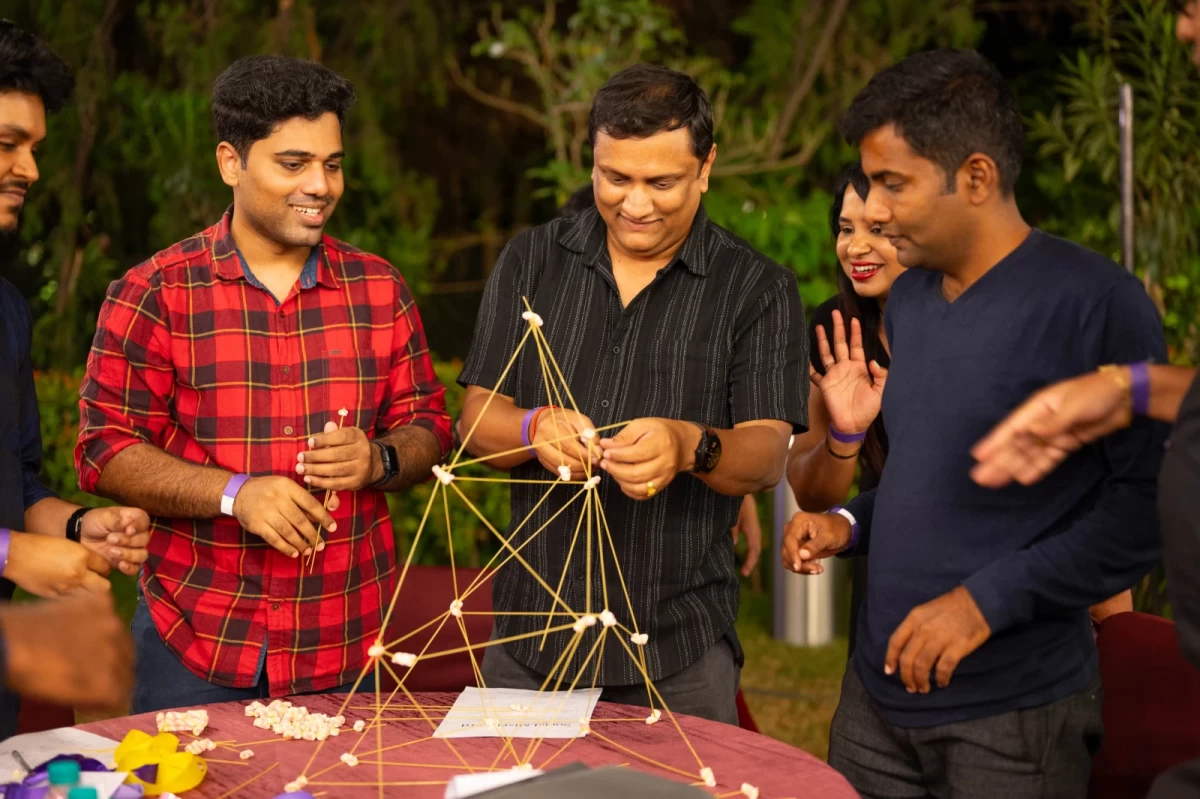


AI will make employees more productive. It will not make them more connected.
In fact, it may quietly do the opposite.
Over the past few years, we’ve seen a shift in how work gets done. Tasks that once required collaboration now require prompts. Meetings that once needed alignment now happen asynchronously. Decisions that once took teams now happen faster, with fewer people involved.
From an efficiency standpoint, this is progress. From a human standpoint, it raises an important question:
What happens to engagement when people need each other less?
Work Is Becoming More Individual. Engagement Isn’t.
AI is fundamentally changing the nature of work.
Repetitive tasks are being automated. Information is more accessible. Problem-solving is becoming faster and more independent. A single individual, with the right tools, can now do what earlier required coordination across teams.
This reduces friction. It also reduces interaction.
When people collaborate less out of necessity, something subtle begins to shift. Conversations become fewer. Spontaneous exchanges reduce. The informal moments that once built relationships start disappearing.
Work becomes efficient.
But efficiency is not the same as connection.

The Hidden Cost of Efficiency
Most organisations are currently focused on the upside of AI.
Faster output.
Lower costs.
Higher productivity.
All of this is real. But there is a quieter side effect that is easier to miss. As work becomes more individual, emotional connection becomes more fragile.
People no longer need to check in as often. They don’t need to brainstorm as much. They don’t rely on each other in the same way. Over time, this reduces the small, everyday interactions that build trust and familiarity.
You still have a team. But it begins to feel like a group of individuals working in parallel.
Efficiency increases. Belonging does not.
Why Traditional Employee Engagement Will Start Failing
Most employee engagement today is built around the assumption that people are already interacting.
That assumption is changing.
In an AI-driven workplace, people will become more protective of their time. They will have less tolerance for activities that feel forced or unnecessary. Generic engagement formats will start to feel even more disconnected from actual work.
This creates a gap.
Organisations will continue investing in engagement.
Employees will continue showing up.
But the impact will reduce.
Because the context has changed.
Engagement cannot be treated as an add-on to work. It needs to respond to how work itself is evolving.
Engagement Will Need to Become Intentional
In the past, engagement often happened naturally. Teams interacted because they had to. Collaboration created connection as a by-product.
That is no longer guaranteed.
In an AI-driven environment, engagement will have to be designed more intentionally. Not as activities. But as moments.
Moments where:
- people feel seen beyond their role
- conversations go beyond tasks
- ideas are shared without pressure
- teams reconnect with purpose
The focus will shift from “doing engagement” to “creating connection.”
That is a very different mindset.
What Will Still Matter
Despite all the changes AI will bring, some things will not change.
People will still want:
- to feel valued
- to be heard
- to belong to something larger than their individual work
- to connect with others beyond deliverables
Technology can optimise how we work. It cannot replace why we connect.
That distinction will become more important over time.
The Role of Leadership Will Change
Leaders will need to pay attention to things that are not immediately visible.
Energy in the room.
Willingness to contribute.
How often people engage beyond what is required.
These signals will matter more than output alone. Because in high-efficiency environments, disengagement can remain hidden for longer.
Teams may continue delivering. But they may stop caring.
And that difference will define long-term performance.
A Shift From Activity to Experience
Employee engagement in the future will not be about increasing frequency. It will be about increasing meaning.
Fewer interactions.
But more intentional ones.
Fewer activities.
But more memorable experiences.
The kind of experiences that bring people together not because they have to, but because they want to.
That shift will separate organisations that simply adopt AI from those that adapt to it.
A Final Thought
AI will change how we work. It will not change what makes work meaningful.
People may rely less on each other for tasks. But they will still need each other for connection.
The organisations that recognise this early will build teams that are not just efficient, but engaged.
And in the long run, engagement will matter more. Because productivity can be automated. Connection cannot.
I’m Arjun, and at SOS Party we work with organisations to design employee engagement and corporate experiences. As AI changes how teams work, the need for intentional, well-designed engagement will only grow.
If you’re exploring this for your team, you can reach me at [email protected]









 Tailored for teams
 Hassle free booking
 Dedicated event planner